The Best Time of Year to Pour Concrete in Colorado
If you are planning a new driveway, patio, or slab, one of the smartest questions you can ask before you spend a dollar is when to schedule the pour. In Colorado, timing is not a minor detail. It is one of the biggest factors in whether your concrete lasts for decades or starts cracking within its first winter. The best time to pour concrete in Colorado is generally late April through early October, with late spring and early fall giving you the most reliable conditions along the Front Range.
That short answer is a starting point, not the whole story. Colorado's high elevation, dramatic temperature swings, intense sun, and heavy freeze-thaw activity all shape how fresh concrete behaves. Below, we break down the ideal temperatures, the best and worst months, how each season affects the finished product, and what a good contractor does to protect your investment no matter when you pour. By the end, you will know exactly how to plan your project for the strongest, longest-lasting result.
Why Timing Matters More in Colorado Than Almost Anywhere Else
Concrete does not simply dry. It hardens through a chemical reaction called hydration, and that reaction is extremely sensitive to temperature. Pour when conditions are right and the concrete gains strength steadily and predictably. Pour when it is too cold or too hot and you can permanently weaken the slab before it ever reaches full strength.
Colorado stacks the deck in a few specific ways. The Front Range sits at roughly 5,000 to 6,000 feet and higher, which means thinner air, stronger UV exposure, and lower humidity than most of the country. Those conditions pull moisture out of fresh concrete faster than normal, which can cause surface cracking if the pour is not managed carefully.
On top of that, the region cycles through freezing and thawing far more often than most areas. Denver and the surrounding Front Range average around 100 freeze-thaw cycles a year. Every one of those cycles puts stress on concrete, and concrete that was poured under poor conditions has far less ability to survive them. This is the same underlying force behind most driveway failures, which is why we cover it in depth in our guide to prevent concrete driveway cracking.
The Ideal Temperature Range for Pouring Concrete
Temperature is the single most important variable. Most concrete professionals agree on the following targets:
- Ideal range: 50°F to 60°F for placement and early curing
- Acceptable working range: 40°F to 85°F with proper precautions
- Danger zone (cold): below 40°F, when curing slows sharply and freezing becomes a risk
- Danger zone (hot): above 85°F to 90°F, when rapid evaporation causes weakness and cracking
Two rules are worth remembering. First, the American Concrete Institute (ACI) defines cold-weather concreting as any time temperatures drop, or are expected to drop, to 40°F or below during the curing period. Second, fresh concrete must reach a compressive strength of about 500 PSI before it can safely survive a single freeze. If it freezes before then, the water inside expands, the internal structure is damaged, and the loss is permanent.
The temperature at night matters just as much as the daytime high. A pleasant 60°F afternoon means little if the temperature drops below freezing overnight while the slab is still young. That is why an experienced crew always checks the full multi-day forecast, not just the day of the pour.
A Month-by-Month Look at Pouring Concrete in Colorado
Colorado's seasons behave a little differently than a standard calendar would suggest, mostly because snow can arrive early and linger late. Here is how the year typically breaks down for exterior residential concrete.
| Season / Months | Rating for Concrete | What to Expect |
|---|---|---|
| Late Spring (May-June) | Excellent | Moderate 50-75F days, snow risk fading after mid-May, strong steady curing. |
| Summer (July-August) | Good with precautions | Warm, but afternoon heat and dry wind speed evaporation. Early-morning pours preferred. |
| Early Fall (Sept-early Oct) | Excellent | Cool, stable, low rainfall. Often the best window of the entire year. |
| Late Fall (late Oct-Nov) | Fair, watch forecast | Cold nights arrive. Cold-weather methods often needed. Plan around sudden freezes. |
| Winter (Dec-Feb) | Possible, specialized only | Requires heated materials, blankets, extra curing time, and higher cost. |
| Early Spring (March-April) | Fair, unpredictable | Freeze-thaw swings and lingering snow. Workable on mild stretches with care. |
The takeaway is simple. Late spring and early fall are the sweet spots. Summer is very workable with the right scheduling, and winter is possible for homeowners who cannot wait, as long as the contractor uses proper cold-weather techniques.
Pouring Concrete in Spring: Strong, but Watch the Early Weeks
By mid-to-late spring, daytime temperatures settle into a comfortable range and the risk of a hard overnight freeze drops off. This gives concrete the steady, moderate conditions it likes, which supports full strength development and a clean finish.
The caution flag is early spring. March and April in Colorado can swing from a warm, sunny afternoon to a snowstorm within a day, and the ground may still be cold or partially frozen. If you are pouring in this window, the crew needs to watch the forecast closely and be ready to protect the slab. Once you get past mid-May, spring becomes one of the most dependable times of year to pour.
Pouring Concrete in Summer: Great Timing, Different Challenges
Summer offers long daylight and reliably warm weather, which sounds ideal. The catch is that Colorado summers are hot, sunny, dry, and often windy, and that combination drives water out of fresh concrete quickly. Rapid surface evaporation leads to plastic shrinkage cracking, where fine cracks appear as the surface dries faster than the interior.
Good contractors adjust for this rather than avoiding summer entirely. Common strategies include pouring in the early morning before the peak heat, using cooler mix water, and applying a curing compound or evaporation retarder immediately after finishing to hold moisture in the slab. Done right, a summer pour produces excellent results. This kind of moisture control is also part of long-term care, which we cover in our guide to maintaining and sealing your driveway.
Pouring Concrete in Fall: Often the Best Window of the Year
Early fall may be the single best time to pour concrete in Colorado. September and early October typically bring cool, stable temperatures, lower humidity swings, and the least rainfall of the year. Concrete cures at a steady pace without the evaporation stress of summer or the freezing risk of winter.
The one thing to respect is Colorado's early cold. Snow and hard frosts can arrive as early as late October, so as fall progresses the forecast becomes the deciding factor. If you are aiming for the best possible conditions, booking a pour for late September is a smart move, and it also means your new surface is fully set before the winter freeze-thaw season begins. This is a great time to plan a concrete driveway installation so the slab is ready before the cold sets in.
Pouring Concrete in Winter: Possible, but It Takes Expertise
Can you pour concrete in the winter in Colorado? Yes, but only with the right techniques, and it is not a do-it-yourself project. When temperatures fall below 40°F, curing slows dramatically. Below freezing, water in the mix can freeze and expand, cracking the concrete from the inside before it ever gains strength.
Professional cold-weather concreting relies on several protective measures:
- Adjusted mix designs, often with accelerators, to speed early strength gain
- Heating the ground or materials so fresh concrete is not poured onto frozen soil
- Insulated curing blankets or temporary enclosures to hold in heat
- Extended curing time before the surface takes any load
- Continuous temperature monitoring of both the air and the concrete
Air-entrained concrete, which contains microscopic air bubbles that give freezing water room to expand, is standard for exterior work in Colorado and becomes especially important for cold-season pours. All of this adds labor, materials, and cost, which is why most homeowners are better off waiting for spring or fall when the schedule allows. When waiting is not an option, the priority is hiring a contractor who has genuine cold-weather experience in this climate.
How Timing Affects Cost and Scheduling
Season influences more than quality. It also affects price and availability. Spring and fall are peak demand periods, so contractor calendars fill quickly and you may need to book several weeks out. Winter pours cost more because of the extra protection and labor involved. Summer often has better availability between the two busy shoulder seasons.
If budget is a major factor in your planning, it helps to understand the full picture before you schedule. Our detailed breakdown of the cost of a new concrete driveway and our guide to driveway replacement costs in Aurora walk through the pricing factors that matter most, so you can time your project for both good weather and a realistic budget.
What a Quality Contractor Does Regardless of Season
Timing gives you a head start, but technique is what actually protects the slab. No matter when you pour, a professional Colorado crew should:
- Check the full multi-day forecast, including overnight lows, before scheduling
- Build a properly compacted gravel sub-base to resist frost heaving
- Use an appropriate air-entrained mix for freeze-thaw resistance
- Apply curing compounds or cure-and-seal products promptly to retain moisture
- Adjust the pour time of day to the season, such as early-morning pours in summer heat
- Protect fresh concrete from sudden weather with sheeting or blankets
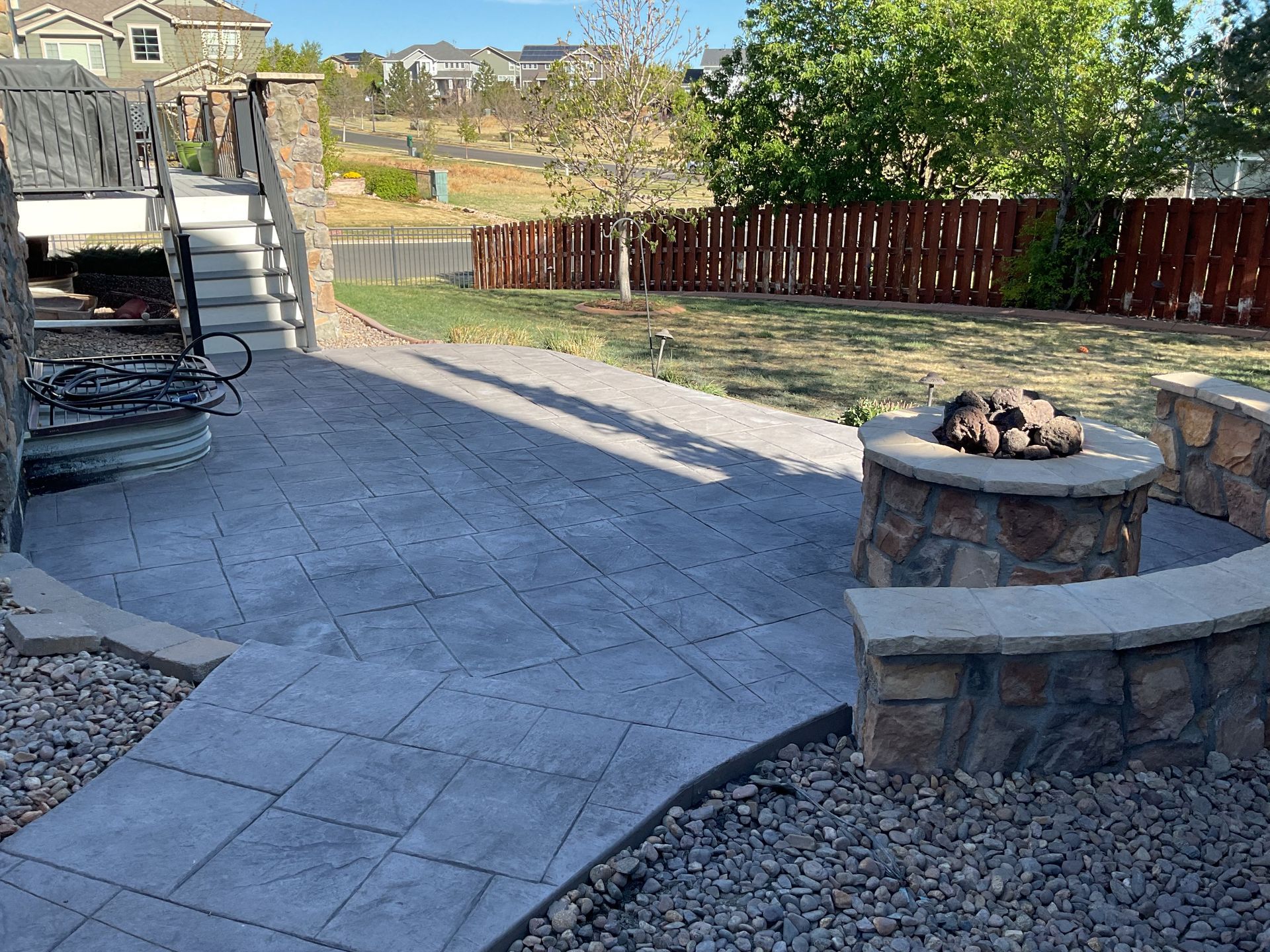
This is exactly the kind of local know-how that separates a driveway that lasts decades from one that fails early. It is also why choosing an experienced local contractor matters as much as choosing the right month. Beyond driveways, the same seasonal planning applies to concrete patios and decorative work like stamped and colored concrete, where surface finish quality is especially sensitive to temperature and evaporation.
Frequently Asked Questions
What is the best month to pour concrete in Colorado?
Late May through June and September through early October are the most reliable windows. These months offer moderate temperatures, lower risk of freezing, and stable conditions that let concrete cure to full strength.
How cold is too cold to pour concrete?
Once temperatures reach or drop below 40°F during curing, you are in cold-weather territory and special precautions are required. Fresh concrete should not be allowed to freeze until it reaches roughly 500 PSI, or it can be permanently damaged.
Can you pour concrete in the winter in Colorado?
Yes, but it requires professional cold-weather methods such as heated materials, insulated blankets, adjusted mixes, and extended curing time. It costs more and is not a do-it-yourself job, so most homeowners are better off waiting for spring or fall when possible.
What temperature is too hot to pour concrete?
Above about 85°F to 90°F, especially on dry, windy days, water evaporates too quickly and the concrete can lose strength and crack. In hot weather, contractors pour early in the morning, use cooler water, and apply curing compounds right away.
How long does concrete take to cure in Colorado?
Concrete typically sets within 24 to 48 hours and reaches most of its strength over about 28 days. Cold weather extends these timelines, which is one reason winter pours require extra patience and protection.
Ready to Plan Your Concrete Project?
The best time to pour concrete in Colorado comes down to matching your project to the seasons that give fresh concrete the steady, moderate conditions it needs. Late spring and early fall are your safest bets, summer works well with the right precautions, and winter is possible with professional cold-weather methods. Just as important as the calendar is the crew you hire, because good technique protects your investment in any season.
If you are ready to schedule a driveway, patio, or slab, the FortifyCrete Co. team will help you choose the right window and handle every detail from forecast to final walkthrough. Contact FortifyCrete Co. today for a free estimate and let our local experts build something that lasts.